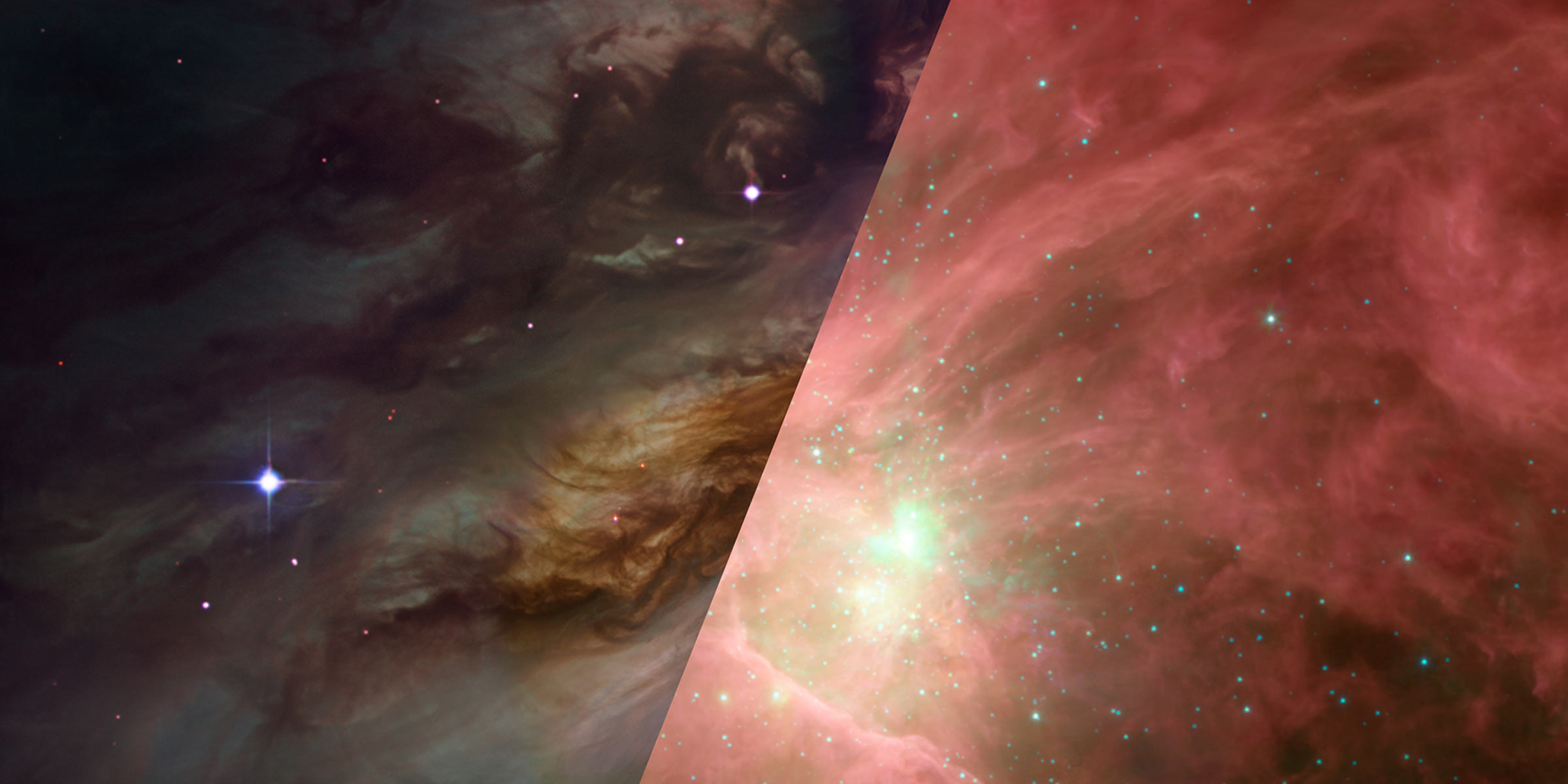
This version of "Flight Through the Orion Nebula in Visible and Infrared Light" has been rendered onto a hemispherical format (azimuthal equidistant projection) for use in planetarium domes....
This version of "Flight Through the Orion Nebula in Infrared Light" has been rendered onto a hemispherical format (azimuthal equidistant projection) for use in planetarium domes. The black circular...
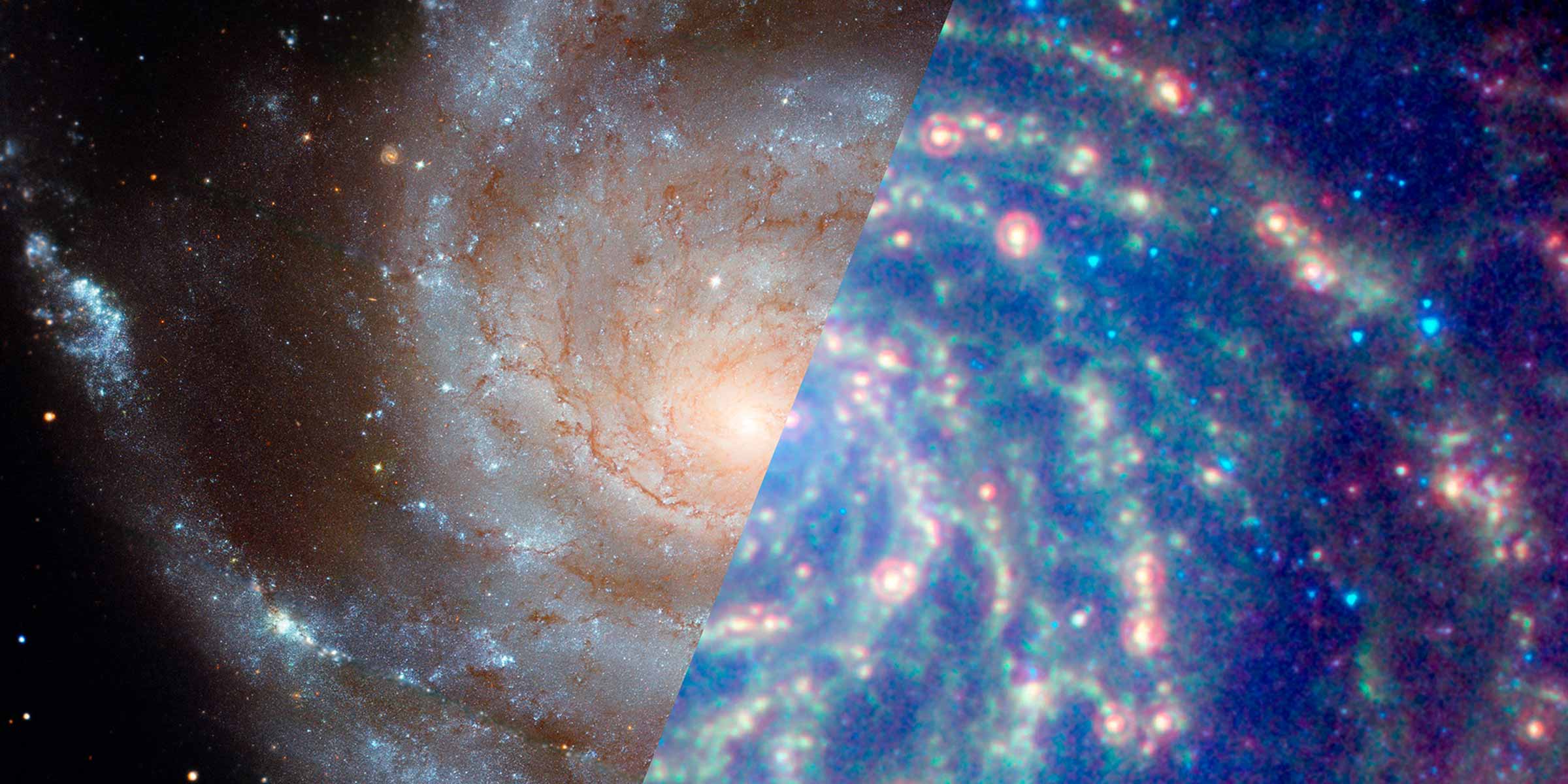
M101 is a comparable in size to the Milky Way. The disk is 100 billion solar masses, and the central bulge is about 3 billion solar masses. M101 is rich is pinkish star-forming regions, many of which are...
The AstroViz 2018 workshop provides an opportunity for professionals who create or use astronomical visualizations to enable science learning, literacy, and communication to meet, share techniques, and...
Scientists have detected thousands of exoplanets: planets orbiting stars other than the Sun. We have seen only a few exoplanets directly, but we can detect them by measuring the effects they have on the...
30 Doradus (the Tarantula Nebula) is a very bright and active star-forming region outside the Milky Way galaxy, at 160,000 light-years away. 30 Doradus is home to the central star cluster NGC 2070, including...
Herbig-Haro objects showcase the long thin jets of emission that emanate from newborn stars. This sequence combines a two-dimensional zoom and a three-dimensional flight to explore Hubble’s striking...
In this visualization of a computer simulation, two spiral galaxies are set on a collision course. As one slices through the other, both are disrupted. The tidal forces of gravity produce long tails of...
This sequence uses infrared (Spitzer) and visible (Hubble) images to reveal the formation of stars within a large cloud of hydrogen gas and dust. The warm gas lights up in the infrared view, appearing...
This visualization of the Bubble Nebula begins with a ground-based view that encompasses the glowing cloud. The high-energy light from the massive O star, BD +60°2522, is responsible for ionizing the...
This sequence uses visible (Hubble) and X-ray (Chandra) imagery to highlight different structures within the Whirlpool galaxy (Messier 51). As seen in visible light, the familiar whirlpool shape is traced...
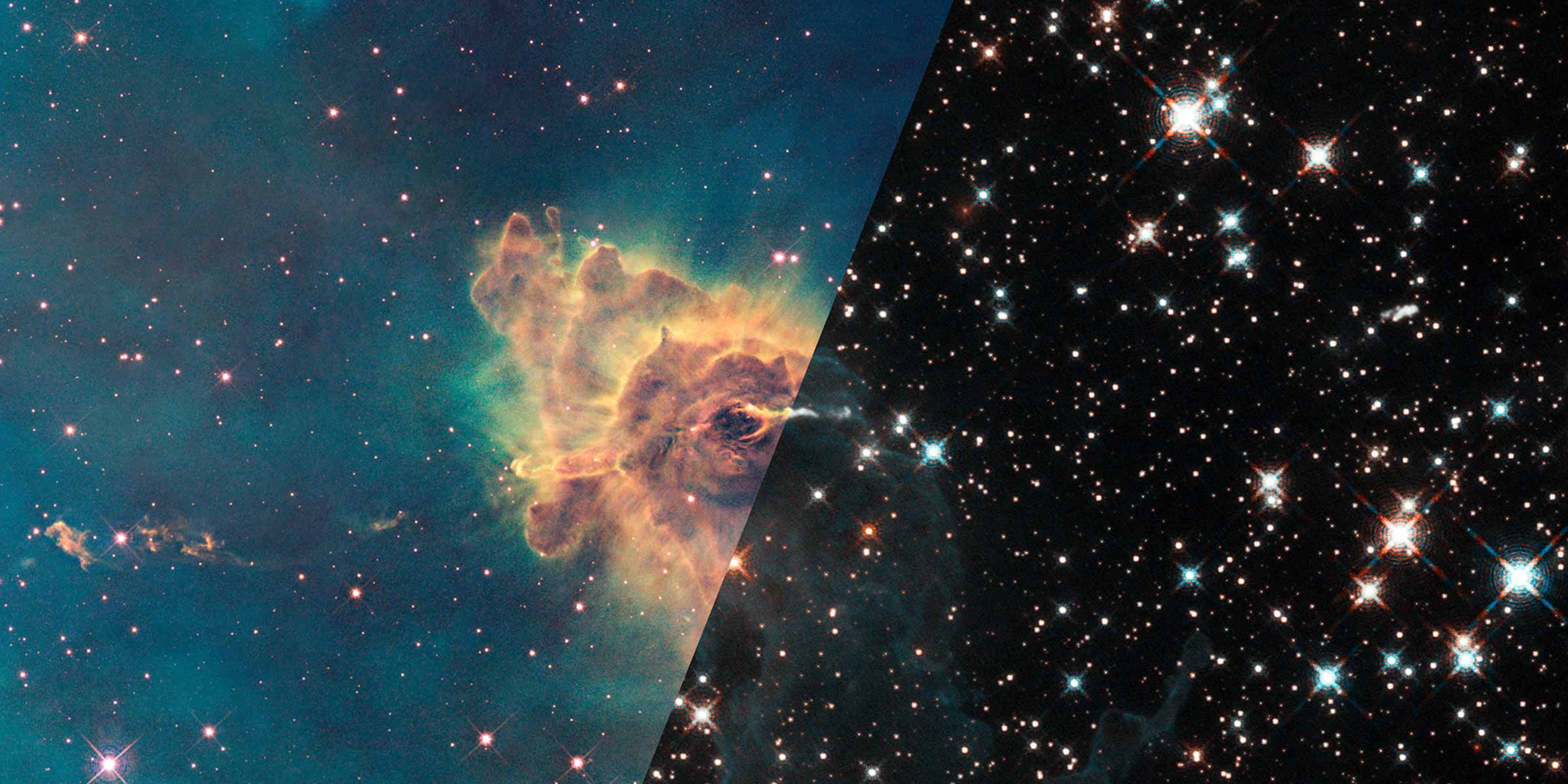
Herbig Haro 901 is an immense pillar of gas and dust inside the Carina Nebula, a huge star-forming region in our galaxy. The pillar is several light-years tall and contains a few massive young stars. They...
Herbig-Haro 666 is a young star that is shooting out narrow collimated jets in opposite directions. The jets are a byproduct of material falling onto to the star. The material is heated and then escapes...
Welcome to a new "one-stop shopping" experience that makes finding the right astronomy image easier than ever!
AstroPix offers publicly accessible image galleries of many of the leading astronomical...
The Crab Nebula (Messier 1) is the remnant of a supernova that exploded in the year 1054 AD. This mysterious “new star,” as early sky watchers called it, was observed around the world and most...