Bring the wonders of the universe to everyone, regardless of their visual ability. A library of many Hubble Space Telescope images has been designed to be downloaded and printed on microcapsule paper,...
On February 22, 2017, NASA announced the discovery of the largest batch of Earth-sized, habitable-zone planets around a single star – TRAPPIST-1A. Further data about these planets was released on...
This version of "Journey into the Orion Nebula" has been rendered onto a hemispherical format (azimuthal equidistant projection) for use in planetarium domes. The black circular mask in the images...
This visualization journeys into the famous star-forming region of the Orion Nebula based on an image from the Hubble Space Telescope. This exhilarating trip begins by flying through a layer of gas above...
Where did life on Earth come from? The answer lies in the stars, which have lives of their own. Stars are responsible for many of the materials that form us and everything around us…
In “Life...
When scientists combine data from the Chandra X-ray Observatory with other telescopes, such as the Hubble or Spitzer space telescopes, or with scientific and mathematical models, we can create data-driven...
This scientific visualization presents a flight to a small globular star cluster and a few hundred thousand years of its development. Globular star clusters contain many thousands to millions of stars,...
Despite our limited abilities to travel to distant objects in outer space, astronomers, computer scientists, and others are developing techniques that nudge astronomy visualization forward from two-dimensional...
Using data from NASA's Chandra X-ray Observatory and other satellites of exploded stars, star-forming regions, and black holes, you'll learn basic coding. By following the video tutorials below,...
This 3D visualization flies across a small portion of the Veil Nebula as photographed by the Hubble Space Telescope. This region is a small part of a huge expanding remnant from a star that exploded many...
The nebula Gum 29 is a star-forming region about 20,000 light-years away in the Carina constellation. At the core of the nebula is a cluster of several thousand stars called Westerlund 2. These newly formed...
Galaxies are vast swarms of billions of stars along with huge interstellar clouds of gas and dust. A spiral galaxy has a broad, thin disk shape, with a bulge of stars in its core. Within the disk are winding...
The three largest galaxies in our Local Group of galaxies are our Milky Way, Andromeda (also known as Messier 31), and Triangulum (also known as Messier 33) galaxies. This scientific visualization of a...
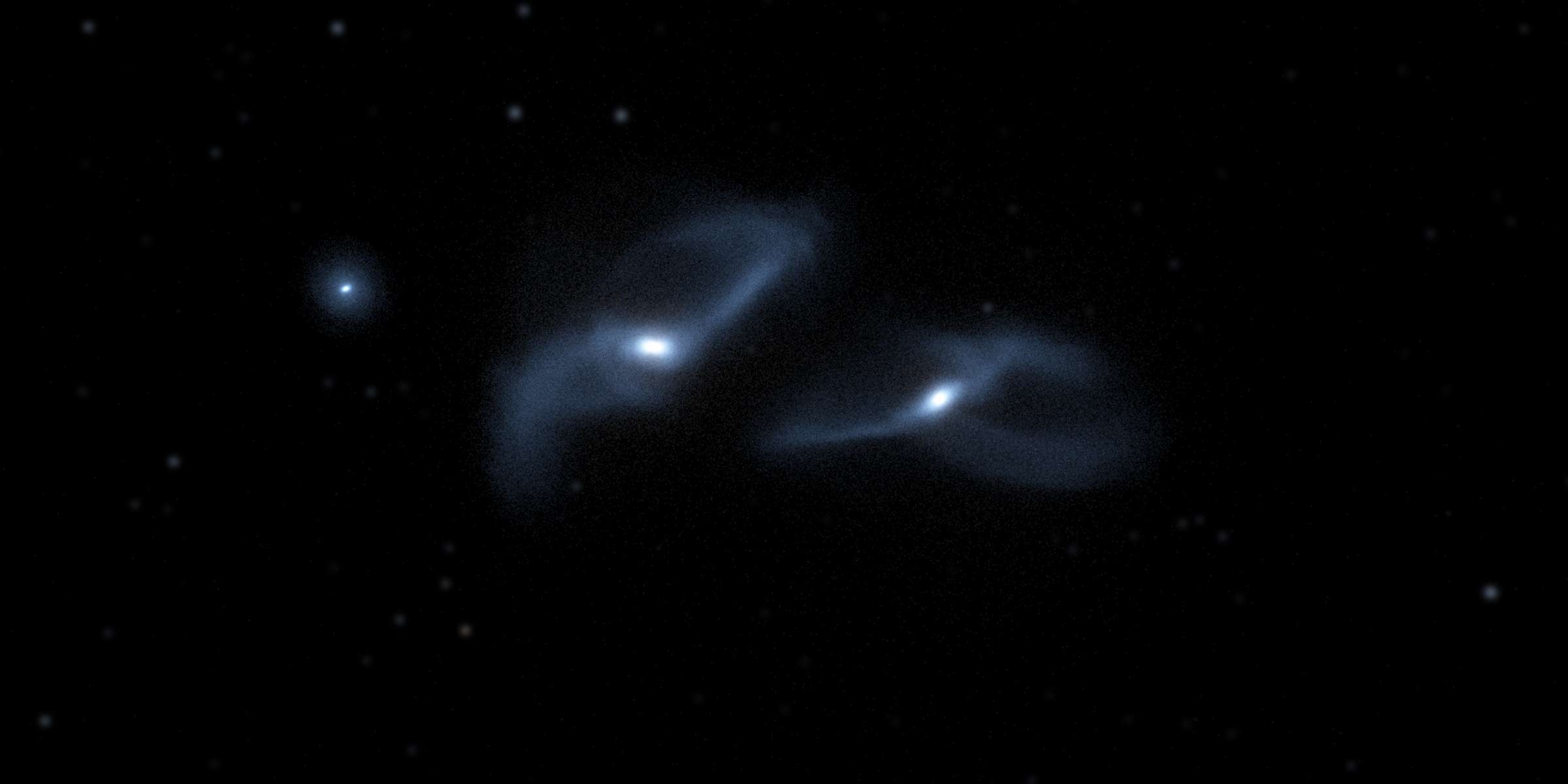
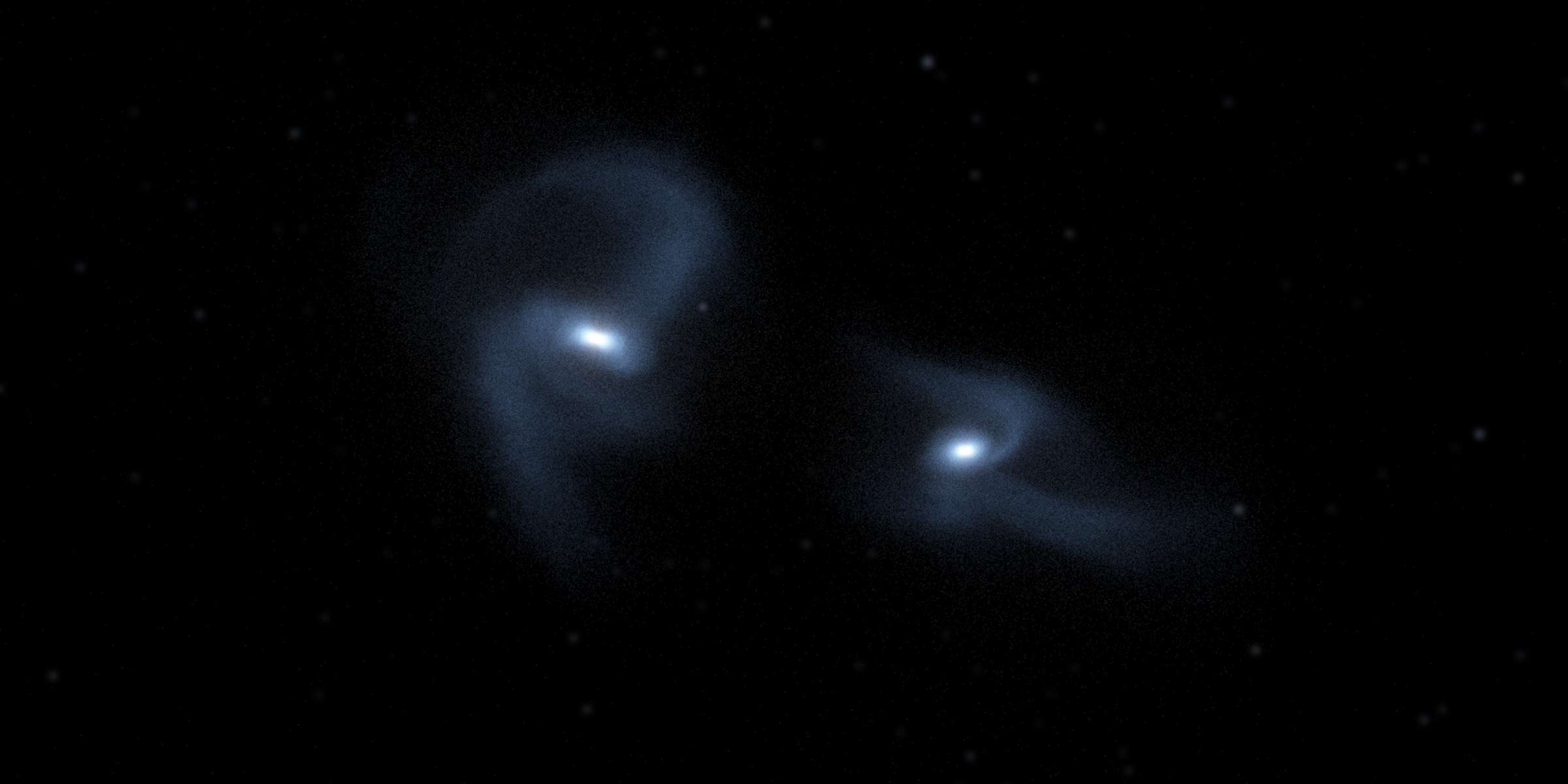
This scientific visualization of a computer simulation depicts a collision between our Milky Way galaxy and the Andromeda galaxy (also known as Messier 31). Hubble Space Telescope observations indicate...
Celestial observers have carefully cataloged the locations of the stars for thousands of years. These atlases often noted the precise positions and brightnesses of individual stars, and were produced by...