
Science Briefing: Making Astronomy More Accessible for Blind and Visually Impaired Audiences
Location
Virtual
Contact Information
About Event
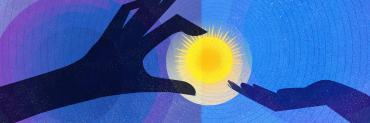
In this edition of NASA’s Universe of Learning Science Briefing, we will hear about different strategies to make astronomy accessible for your audience, specifically for the blind or visually impaired. Our panel of speakers will share their expertise in creating accessible astronomy resources that you can incorporate into your events and programming. Noreen Grice will discuss how tactile images and explorations can be used in multiple ways in teaching astronomy to visually impaired, blind, and sighted learners. The Astronify team will discuss their software designed to make the data at Mikulski Archive for Space Telescopes (MAST) accessible in a sonified format, for research and accessibility purposes. Christine Malec will share her experience collaborating with a professional audio describer to create verbal descriptions of the images posted for the public by the Chandra X-Ray Observatory. In addition to these perspectives, the Science Briefing team will highlight several resources relating to this content.
About the Series
The NASA’s Universe of Learning Science Briefings are professional learning telecons for the informal science education community, done in partnership with the NASA’s Museum & Informal Education Alliance, now found on NASA CONNECTS. These monthly thematic briefings highlight current NASA astrophysics explorations and discoveries from across the suite of NASA astrophysics missions. NASA scientists and engineers provide contemporary science results, and are able to respond to listener questions during the telecon. NASA-developed education and outreach resources, matched to the monthly theme, are included in every briefing.
In order to participate in the telecon and ask questions of the scientists, please join NASA’s Museum & Informal Education Alliance.
Facilitator & Presenters
-
 Dr. Quyen N. Hart is a Senior Education and Outreach Scientist in the Office of Public Outreach at the Space Telescope Science Institute in Baltimore, Maryland USA. She works on various aspects of NASA’s Universe of Learning and other outreach projects for the Hubble Space Telescope, the James Webb Space Telescope, and the future Nancy Grace Roman Space Telescope.
Dr. Hart earned her Ph.D. from the University of Colorado Boulder, where she studied active super-massive black holes in clusters of galaxies. For more than two decades, Dr. Hart has been actively involved in formal and informal astronomy education, providing unique learning experiences for people of all ages. She is passionate about sharing the wonders of astronomy and science to the general public because she knows that everyone can be a scientist!
-
Noreen Grice holds Masters degrees in both astronomy and business administration. She is an astronomy educator with over 30 years of experience in the planetarium field presenting programs, courses and events. Through her consulting company, You Can Do Astronomy LLC, she makes astronomy more accessible to students with disabilities and different learning styles and especially for people who are blind or visually impaired. Noreen has authored accessible astronomy books with tactile images that allow readers to explore celestial objects with their fingertips. Her most recent book is Touch the Stars, 5th edition.
-
Clara Brasseur is a PhD Student at the University of St Andrews and the primary developer of Astronify, software for sonifying astronomical time series data.
-
Jenn Kotler is the user experience designer at the Mikulski Archive for Space Telescopes working to make space telescope data more accessible so people can do amazing science.
-
Scott Fleming is the branch manager for the Archive Science Application Branch, which builds and maintains search interfaces to let people access and discover data at the Mikulski Archive for Space Telescopes. He has a PhD in astronomy, studies stars and exoplanets, enjoys programming, and is a proponent of open data and open software.
-
Christine Malec is an arts and culture consultant and a member of the blind community based in Toronto Canada. She has a non-scientist’s passion for astronomy and space exploration. Her interest is in finding ways to make these fields more accessible and comprehensible to people with vision loss.
 Dr. Quyen N. Hart is a Senior Education and Outreach Scientist in the Office of Public Outreach at the Space Telescope Science Institute in Baltimore, Maryland USA. She works on various aspects of NASA’s Universe of Learning and other outreach projects for the Hubble Space Telescope, the James Webb Space Telescope, and the future Nancy Grace Roman Space Telescope.
 Noreen Grice holds Masters degrees in both astronomy and business administration. She is an astronomy educator with over 30 years of experience in the planetarium field presenting programs, courses and events. Through her consulting company, You Can Do Astronomy LLC, she makes astronomy more accessible to students with disabilities and different learning styles and especially for people who are blind or visually impaired. Noreen has authored accessible astronomy books with tactile images that allow readers to explore celestial objects with their fingertips. Her most recent book is Touch the Stars, 5th edition.
 Clara Brasseur is a PhD Student at the University of St Andrews and the primary developer of Astronify, software for sonifying astronomical time series data.
 Jenn Kotler is the user experience designer at the Mikulski Archive for Space Telescopes working to make space telescope data more accessible so people can do amazing science.
 Scott Fleming is the branch manager for the Archive Science Application Branch, which builds and maintains search interfaces to let people access and discover data at the Mikulski Archive for Space Telescopes. He has a PhD in astronomy, studies stars and exoplanets, enjoys programming, and is a proponent of open data and open software.
 Christine Malec is an arts and culture consultant and a member of the blind community based in Toronto Canada. She has a non-scientist’s passion for astronomy and space exploration. Her interest is in finding ways to make these fields more accessible and comprehensible to people with vision loss.