
Science Briefing: Exploring the Infrared Universe
Location
Virtual
Contact Information
About Event
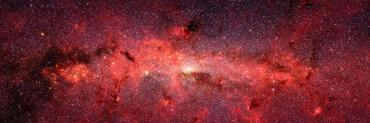
Please join us for this edition of NASA’s Universe of Learning Science Briefings! We will learn how infrared astronomy works and what we can learn using infrared light. This briefing will give useful science background for NASA's next flagship observatory, the James Webb Space Telescope, which will observe in the infrared.
Dr. Varoujan Gorjian will discuss how astronomers study the universe with infrared light, a form of light our eyes can't see. Dr. Andrew Burkhardt will examine how interstellar dust helps create the most complex molecules known in space, and how we use observatories to study both dust particles and the molecules formed on them. Dr. Elena Sabbi will examine the four instruments on board the James Webb Space Telescope, and discuss how astronomers will exploit their capabilities to push science barriers to the edge of the universe.
About the Series
The NASA’s Universe of Learning Science Briefings are professional learning telecons for the informal science education community, done in partnership with the NASA’s Museum & Informal Education Alliance, now found on NASA CONNECTS. These monthly thematic briefings highlight current NASA astrophysics explorations and discoveries from across the suite of NASA astrophysics missions. NASA scientists and engineers provide contemporary science results, and are able to respond to listener questions during the telecon. NASA-developed education and outreach resources, matched to the monthly theme, are included in every briefing.
In order to participate in the telecon and ask questions of the scientists, please join NASA’s Museum & Informal Education Alliance.
Facilitator & Presenters
-
Dr. Kelly Lepo is an Education and Outreach Scientist at the Space Telescope Science Institute, where she primarily works to support outreach efforts for the upcoming James Webb Space Telescope. She has a PhD in Astronomy and Astrophysics from the University of Toronto. During her time in Canada, she made numerous local and national media appearances to talk about everything from the 2012 Mayan Apocalypse to the Super Blue Blood Moon. She has also served as the Coordinator of the McGill Space Institute, designed undergraduate teaching labs, taught physics at Gonzaga University, and helped build the Large Hadron Collider at CERN.
-
Dr. Varoujan Gorjian is a Spitzer Research Scientist. He obtained his undergraduate degree in Astronomy at Caltech in 1992 and his Ph.D. at UCLA in 1998. He then went to work at JPL on the Spitzer Space Telescope project and has been there ever since. His research interests range from supermassive black holes at the centers of galaxies to planets orbiting around nearby stars. He is also very involved with education and public outreach and does research with high school science teachers from across the country.
-
Dr. Andrew Burkhardt is a Submillimeter Array Postdoctoral Fellow at the Center for Astrophysics | Harvard & Smithsonian. He did his undergraduate work at the University of Michigan in Astrophysics and Physics and a Ph.D. in Astronomy at the University of Virginia and the National Radio Astronomy Observatory. His research is on astrochemistry -- the study of how we go from the elemental ashes from the deaths of stars to the complex prebiotic chemistry of the early Earth. He uses astronomical observatories and theoretical chemical models to learn how the most complex molecules in the interstellar medium are created.
-
Dr. Elena Sabbi is an astrophysicist at the Space Telescope Science Institute where she leads the team that characterizes and monitors NIRSpec, one of the four instruments on the James Webb Space Telescope. Before that, she led the Team responsible for the Wide Field Camera 3 on the Hubble Space Telescope. She studies star formation, binary stars, and stellar evolution in the Milky Way and nearby galaxies, and how local and global effects affect the evolution of young star clusters.