
Science Briefing: Live from AAS! 2023
Location
Virtual
Contact Information
About Event
Please join us for this special edition of the NASA’s Universe of Learning Science Briefings! We will be live at the American Astronomical Society meeting in Seattle, Washington, where scientists will be releasing the latest findings on the universe. We’ll provide access to some of the breaking news coming out of NASA Astrophysics missions, and tie these results to NASA’s Big Questions:
- How Does the Universe Work?
- How Did We Get Here?
- Are We Alone?
In addition to the new science results, we will highlight several NASA resources. There will also be opportunities for you to ask questions directly of those presenting.

About the Series
The NASA’s Universe of Learning Science Briefings are professional learning telecons for the informal science education community, done in partnership with the NASA’s Museum & Informal Education Alliance, now found on NASA CONNECTS. These monthly thematic briefings highlight current NASA astrophysics explorations and discoveries from across the suite of NASA astrophysics missions. NASA scientists and engineers provide contemporary science results, and are able to respond to listener questions during the telecon. NASA-developed education and outreach resources, matched to the monthly theme, are included in every briefing.
In order to participate in the telecon and ask questions of the scientists, please join NASA’s Museum & Informal Education Alliance.
Facilitator & Presenters
-
 Kelly Lepo is an Education and Outreach Scientist at the Space Telescope Science Institute, where she primarily works to support outreach efforts for the James Webb Space Telescope. She received a Ph.D. in Astronomy and Astrophysics from the University of Toronto. During her time in Canada, she made numerous local and national media appearances to talk about everything from the 2012 Mayan Apocalypse to the Super Blue Blood Moon. She previously served as the Coordinator of the McGill Space Institute, designed undergraduate teaching labs, taught physics at Gonzaga University, and helped build the Large Hadron Collider at CERN.
-
Jim Manning is a science education consultant with long experience as a planetarium director, including in a museum setting. Most recently, he has served as head of the Office of Public Outreach at the Space Telescope Science Institute in Baltimore, and as Executive Director of the Astronomical Society of the Pacific in San Francisco. He’s a past president of the International Planetarium Society, and has been Principal Investigator or Co-PI for a number of NASA-funded and NSF-funded programs in informal science education. He currently consults for NASA’s Universe of Learning program.
-
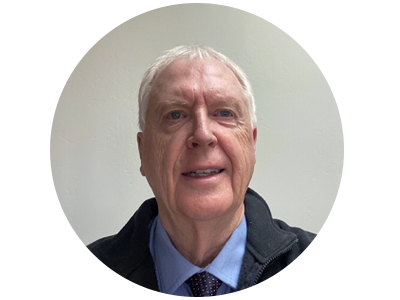 Rob Fesen is an observational astronomer specializing in supernovae, their remnants, and interstellar emission nebulae. He obtained his undergraduate degree from Villanova University in 1971, a masters from the University of Hawaii in 1973, and a PhD in Astronomy from the University of Michigan in 1981. He also was a computer programmer in the comptroller's department at AT&T from 1983 to 1986. He did post-doctoral research at NASA's Goddard Space Flight Center and at the Center for Astronomy and Astrophysics at the University of Colorado before coming to Dartmouth in 1989. Fesen has held visiting positions at the University of Texas at Dallas and at the Joint Institute for Laboratory Astrophysics (JILA) at the University of Colorado, Boulder. Fesen was on the Board of Directors for the SALT telescope from 2001 - 2010 and was Acting Director of MDM Observatory from 1995-1996.
-
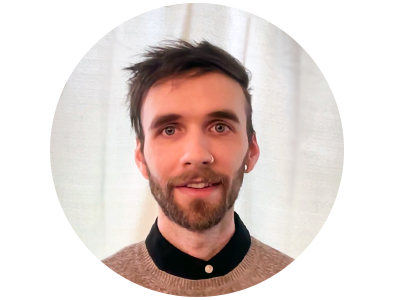 Kellen Lawson is an astronomer studying the formation and evolution of planetary systems using images from ground- and space-based observatories. He completed his undergraduate degree at the College of Charleston in 2015 and his PhD at the University of Oklahoma in 2022. In August 2022, he began working at NASA's Goddard Space Flight Center in Greenbelt, Maryland as a NASA Postdoctoral Program Fellow — where he studies exoplanets and circumstellar disks using data from JWST and Subaru Telescope.
-
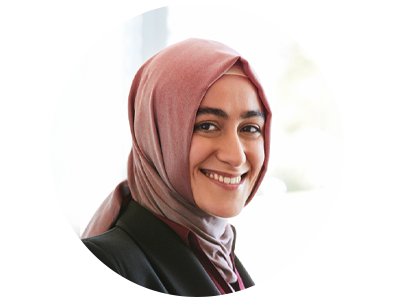 Burçin Mutlu-Pakdil is a Turkish-American astrophysicist and Assistant Professor at Dartmouth College. She discovered a new galaxy – now called "Burcin's galaxy." She has been honored as a 2018 TED Fellow and 2020 TED Senior Fellow, featured in National Geographic as a "woman of impact," named a 2019 AAAS IF/THEN Ambassador, and featured in a Science Friday film documentary, "Breakthrough: The Galaxy Hunter," and in the CBS TV Show "Mission Unstoppable".